A friend from another church sincerely asked me about my faith. Many people say that there is no archaeological evidence for the Book of Mormon while much does exist for the Bible. How have I reconciled with that? This is my response.
"Yes, if a Mormon feels that they are being challenged, many will often start "bearing testimony" of what they believe from their own personal experiences. I see pros and cons to this, but I won't get into that.
Why this doesn't bother me (the afore mentioned evidence issue), because obviously I've had to reconcile it. How do we know the Bible is true? It contains facts about battles, places, etc. Basically, history and culture back up a lot of facts. BUT, what backs up any of the miracles? What backs up anything that says God is in this book? While there are tons upon tons of apologetics resources that try to prove with science or logic or whatever that it was possible for the Red Sea to be parted or for Jesus to have risen in 3 days, there are tons upon tons of resources that try to prove other wise also using logic and science. Basically, you choose what to believe. It is a debate without end. BUT, does it really matter if someone can prove scientifically that the Red Sea was parted? That is wasn't? So, although I can believe that the Bible is historically and culturally accurate, what is there to make me believe that the fantastical things within the book are also true? Are there not religious stories, legends, and fairy tales from other cultures that also contain real places, people and events that can be backed up by history and culture? If one's argument that the fantastical stories in the Bible are true just because they can be backed up by history and culture, then why not believe that the religious stories of the Aztecs or the Incas or the Maya or any other civilization are also true? Do they not contain historical and cultural evidence of real societies? But hasn't science disproved them? Hasn't science disproved that snakes and donkey's can't talk, though? Should I not believe that these legends are true because there are no apologetics for them? The thing is, in these areas where Catholicism has invaded and dominated, there are few believers left, and nobody to actually defend them. If I am only to believe a book is true because of historical and cultural evidence, then sure, the Book of Mormon is hugely lacking (that being said, please to not quote me out of context on that last sentence, especially without relating what I am about to say).
BUT, the thing is, historical and cultural evidence alone is not enough. That stuff is easy to believe. I mean, I believe what I learned from my history and social studies text books. And the point of religious scripture, at least in Christianity, is to relate the story of God, strengthen belief in Him, and to learn to live in a way that is appeasing to Him. So, what is there that proves the existence of God? Science? Science has also claimed to disprove His existence. I can't trust another man to tell me that God is real. I can believe Joseph Smith is a prophet, but just because he or any other man tells me God is real, that doesn't make it so. I can't trust books. I can't trust science. I can't trust man. How am I supposed to know that God is real?
Mormonism addresses this issue by more than telling me to look at nature and think how it's impossible for it's intricacy can be an accident. Mormonism asks people to pray to know truth. Mormonism asks people to ask God to tell them what nobody else can: That He exists. That the scriptures are real. Yes, feelings can be misleading. Yes, not everybody literally feels something. Yes, people who believe in God but pray to know that the Book of Mormon is true may not get an answer. I cannot tell you why. I can tell you that I have. I can tell you that because I was trained to think very logically in the church of Christ it took me a very long time to iron out a lot of details. I rejected a lot of the cliché answers that Mormons gave me, and I still do. What I can tell you about the LDS Church that I love, is that it presents its case, then asks people to pray to know for themselves, because an answer from God, cannot be explained by science, just as Christ's ability to rise from the grave cannot be explained by science. It was spiritual. It was a miracle.
So, while there is a lack of cultural and historical evidence for the events of the Book of Mormon, I see no reason why I should believe in it any less than the Bible, or the Q'ran, or the Popol Vuh, or atheistic literature. The thing is, if there is a God, I will rely on Him and not on the explanations of man (also do not take that last phrase out of context without reading further). I am not saying that "evidence" from any party that tries to disprove my belief in the Bible or the Book of Mormon should be pushed aside just because I have received an answer from God otherwise. I think that is a fault in a lot of mainstream Mormon dogma. What I am saying, is that after having considered everything, if a belief has not been disproved, continue seeking secular and spiritual evidence (secular: from history, man, culture, science, spiritual: from God).
I have heard it said that the Book of Mormon is not true because the animals mentioned have not been found in the Americas. I have heard other such arguments, but I maintain that a lack of evidence does not prove that something didn't happen. If my only evidence that God reached down and took a rib from Adam and some dust and made a woman comes from the Bible, then what other evidence is there that supports this? I choose to believe the Book of Mormon 1. Because I have yet to read anything that makes me think that it is false and 2. Because I have asked God about it, and He has reassured me of its truth.
I hope this has been insightful. I hope it makes sense, and I'd love to hear your thoughts on it."
Thursday, May 26, 2011

Sunday, May 1, 2011
Bin Laden's Death, Turning the Other Cheek, and Justice
Another terrorist bites the dust. Another man is dead. Another father is lost. Another family feels justified. Another flag is waved in celebration. Another Facebook status is updated.
I am an amateur religious philosopher. An amateur political idealist. An amateur adult. But I do know that although a man who has done almost unimaginable evil has been assassinated, I feel a pinch of unease as I see people cheering about his death specifically. No, I certainly have not been affected quite like the families of the 9/11 victims and the many more who have been victimized in the Middle East (whom we often forget) as a direct result of his actions. I hope to never have to feel that degree of grief and loss. But there is something about taking pleasure in the death of a man that reminds me of the victory that Al Qaida expressed when the World Trade Centers were hit. When the Westboro Baptist Church protests at a soldier's funeral. That I sense in the Facebook statuses of this fast-paced world.
Here are a few Facebook statuses that I have seen on Facebook in the past few hours:
1. "No better place to celebrate Bin Laden's death than AT THE WHITE HOUSE!!!!"
2. "not to be redundant or anything...but heck yes!! Osama is dead!! It took is ten years, but we finally did it :)"
3. "Osama is dead!!"
4. "that guy is in for a big surprise... sorry homie, no virgins. Just a bunch of other guys that you promised virgins waiting for you."
5. "we got that piece of s***, f*** yea!"
6. "Ding dong Bin Laden's dead!"
and the ever popular nationalistic saying:
7. "greatest country in the world, proud to be an American"
Now, I'd like to take a moment to reflect on some Bible verses that come to mind that I have seen on Facebook statuses in the past few hours. Thanks to all those Lipscomb students who have been putting them up:
Matthew 5:38-48
"You have heard that it was said, ‘Eye for eye, and tooth for tooth.’ But I tell you, do not resist an evil person. If anyone slaps you on the right cheek, turn to them the other cheek also. And if anyone wants to sue you and take your shirt, hand over your coat as well. If anyone forces you to go one mile, go with them two miles. Give to the one who asks you, and do not turn away from the one who wants to borrow from you.
You have heard that it was said, ‘Love your neighbor and hate your enemy.’ But I tell you, love your enemies and pray for those who persecute you, that you may be children of your Father in heaven. He causes his sun to rise on the evil and the good, and sends rain on the righteous and the unrighteous. If you love those who love you, what reward will you get? Are not even the tax collectors doing that? And if you greet only your own people, what are you doing more than others? Do not even pagans do that? Be perfect, therefore, as your heavenly Father is perfect."
Now, I am by no means suggesting that turning the cheek should be interpreted as not seeking justice for those who attack innocent people or not trying to protect the innocent. BUT I do think these versus teach us that there is a respect for humanity that is to be understood for all people, and perhaps that means not rejoicing at the death OF ANYONE. While bin Laden did many terrible things that he will have to answer for, and while I am no judge as to whether or not his life needed to be ended (I have seen that many of you question the necessity of spending so much time and money on killing a man who likely has little influence anymore on Al Qaida's actions and whose assassination is more likely to cause harmful retaliations), let us not forget that God created him. That there are people hurting right now in his absence, and we are not going to improve our relationships with those who have been wounded by taking pride or pleasure in their loss. That is not the higher law.
I'm writing this, not just because I believe in it, but because I struggle with it. To all those who have read this, I ask you, how should we react to the news of a man who has been killed in ANY situation. How do we react to the news of the death of a man who has committed horrible atrocities towards other human beings? How do we as good Christians, Jews, Muslims, Hindus, Buddhists, and atheists avoid desiring our personal ideas of justice over compassion?
I am an amateur religious philosopher. An amateur political idealist. An amateur adult. But I do know that although a man who has done almost unimaginable evil has been assassinated, I feel a pinch of unease as I see people cheering about his death specifically. No, I certainly have not been affected quite like the families of the 9/11 victims and the many more who have been victimized in the Middle East (whom we often forget) as a direct result of his actions. I hope to never have to feel that degree of grief and loss. But there is something about taking pleasure in the death of a man that reminds me of the victory that Al Qaida expressed when the World Trade Centers were hit. When the Westboro Baptist Church protests at a soldier's funeral. That I sense in the Facebook statuses of this fast-paced world.
Here are a few Facebook statuses that I have seen on Facebook in the past few hours:
1. "No better place to celebrate Bin Laden's death than AT THE WHITE HOUSE!!!!"
2. "not to be redundant or anything...but heck yes!! Osama is dead!! It took is ten years, but we finally did it :)"
3. "Osama is dead!!"
4. "that guy is in for a big surprise... sorry homie, no virgins. Just a bunch of other guys that you promised virgins waiting for you."
5. "we got that piece of s***, f*** yea!"
6. "Ding dong Bin Laden's dead!"
and the ever popular nationalistic saying:
7. "greatest country in the world, proud to be an American"
Now, I'd like to take a moment to reflect on some Bible verses that come to mind that I have seen on Facebook statuses in the past few hours. Thanks to all those Lipscomb students who have been putting them up:
Matthew 5:38-48
"You have heard that it was said, ‘Eye for eye, and tooth for tooth.’ But I tell you, do not resist an evil person. If anyone slaps you on the right cheek, turn to them the other cheek also. And if anyone wants to sue you and take your shirt, hand over your coat as well. If anyone forces you to go one mile, go with them two miles. Give to the one who asks you, and do not turn away from the one who wants to borrow from you.
You have heard that it was said, ‘Love your neighbor and hate your enemy.’ But I tell you, love your enemies and pray for those who persecute you, that you may be children of your Father in heaven. He causes his sun to rise on the evil and the good, and sends rain on the righteous and the unrighteous. If you love those who love you, what reward will you get? Are not even the tax collectors doing that? And if you greet only your own people, what are you doing more than others? Do not even pagans do that? Be perfect, therefore, as your heavenly Father is perfect."
Now, I am by no means suggesting that turning the cheek should be interpreted as not seeking justice for those who attack innocent people or not trying to protect the innocent. BUT I do think these versus teach us that there is a respect for humanity that is to be understood for all people, and perhaps that means not rejoicing at the death OF ANYONE. While bin Laden did many terrible things that he will have to answer for, and while I am no judge as to whether or not his life needed to be ended (I have seen that many of you question the necessity of spending so much time and money on killing a man who likely has little influence anymore on Al Qaida's actions and whose assassination is more likely to cause harmful retaliations), let us not forget that God created him. That there are people hurting right now in his absence, and we are not going to improve our relationships with those who have been wounded by taking pride or pleasure in their loss. That is not the higher law.
I'm writing this, not just because I believe in it, but because I struggle with it. To all those who have read this, I ask you, how should we react to the news of a man who has been killed in ANY situation. How do we react to the news of the death of a man who has committed horrible atrocities towards other human beings? How do we as good Christians, Jews, Muslims, Hindus, Buddhists, and atheists avoid desiring our personal ideas of justice over compassion?
Sunday, February 6, 2011
Fears of Expectations as an LDS Woman
I thought about changing the title of this blog. I thought maybe it would elicit I-told-you-so comments from people who have not been happy with the choices I have made in the past couple years. BUT, that is what this blog is about, AND regardless, I wouldn't have made my decisions any other way.
I have pondered the issue all day. Over the past couple months, I have had many conversations with different male friends that often led to a discussion on gender roles. No, I highly doubt they realized that that's what we were talking about, but it was. One person told me they would be ashamed to stay home and raise their kids while their wife had a full-time job or went to law school. Another told me it's ok if I don't know what I want to do for the rest of my life because once I have kids I'll be home with them all day long. And the majority of men and women tell me that the woman is to "nurture" and the man is to "provide" and "protect" for the family, as if those words meant the mom is the sole caregiver and the father is the sole bread-winner or that those roles could not possible be divided equally.
All these comments are meant with sincerity. They are not meant to make me feel that I am only as valuable as my child-rearing skills, but they make me feel that way. I have been told that I should get a college education so that I can pass that knowledge on to my children. Never have I been told that I should pass that knowledge along to my fellow man. I mean, let's be serious, I'm probably not going to sit around with my kids and explain to them phonetics and syntax, nor do I think that doing so will make them better human beings. So why am I even going to school? I want my sons AND my daughters to grow up and get as much education as they want. I want them BOTH to have huge aspirations. I want to hear my daughter tell me she wants to be an astronaut, and I want her to actually try just as much as I hope my son does the same.
I feel like I am judged harshly for wanting to have a career where I am helping immigrants assimilate into American culture or teaching literacy when I should want to be at home all the time with my children. But what about my husband? Is he looked down upon for having a full-time career and spending less time at home than I am? Would my children be any worse off with a father who took them to school in the mornings and was there for them when they got home each afternoon? I feel like that's a horrible expectation for men, as well.
I'm not saying that I don't want to raise children or that I expect to have a full-time career while my husband is a home maker. I discovered last summer that I love children. I loved playing with elementary school kids for hours a day in Mexico last summer. I loved helping them read Harry Potter in Spanish or being their soccer referee at recess, or playing zombie games after dinner. I think I spent more free time with children than any other age group, in fact. What bothers me, is that I feel like nobody asks me what I want. Everyone assumes that they know what I need to do and that I am acquiescing.
So, here's what I really want. I want a husband who loves me and who will decide with me how many children we want, can financially support, and can devote enough time to equally. I want to raise my children, hand-in-hand, with my husband. I want our children to see us as equally capable of having deep conversations, helping with homework, packing lunches, and playing games. I also want them to see that we both value education as much for girls as we do for boys. I want them to look at both of us as people who spend time not just raising them, but devoted to our communities and helping others. I want my children to see that it is important to help those outside their physical families, and that it is important for both men and women to reach out and work for the betterment of mankind. I want them to judge my husband and I based on our works and our character, and not on our gender and what roles we are "supposed" to fulfill.
I think understanding how I feel about my own society's expectations for me as a woman will help me with my project this summer. As I interview moms in rural Mexico about what they hope for the daughters they are raising, I hope to empathize with them by understanding my hopes more clearly. Do they hope their daughter gets enough education to snag a man? Do they hope their daughter gets the education she wants to do the job she desires? Do they hope their daughters provide them with many grandchildren? Do they just want them to be happy? I don't know, but thinking about these things and how they affect me, will hopefully give me insight into the lives the roles that they fulfill and how they are passing those beliefs onto the next generation.
I have pondered the issue all day. Over the past couple months, I have had many conversations with different male friends that often led to a discussion on gender roles. No, I highly doubt they realized that that's what we were talking about, but it was. One person told me they would be ashamed to stay home and raise their kids while their wife had a full-time job or went to law school. Another told me it's ok if I don't know what I want to do for the rest of my life because once I have kids I'll be home with them all day long. And the majority of men and women tell me that the woman is to "nurture" and the man is to "provide" and "protect" for the family, as if those words meant the mom is the sole caregiver and the father is the sole bread-winner or that those roles could not possible be divided equally.
All these comments are meant with sincerity. They are not meant to make me feel that I am only as valuable as my child-rearing skills, but they make me feel that way. I have been told that I should get a college education so that I can pass that knowledge on to my children. Never have I been told that I should pass that knowledge along to my fellow man. I mean, let's be serious, I'm probably not going to sit around with my kids and explain to them phonetics and syntax, nor do I think that doing so will make them better human beings. So why am I even going to school? I want my sons AND my daughters to grow up and get as much education as they want. I want them BOTH to have huge aspirations. I want to hear my daughter tell me she wants to be an astronaut, and I want her to actually try just as much as I hope my son does the same.
I feel like I am judged harshly for wanting to have a career where I am helping immigrants assimilate into American culture or teaching literacy when I should want to be at home all the time with my children. But what about my husband? Is he looked down upon for having a full-time career and spending less time at home than I am? Would my children be any worse off with a father who took them to school in the mornings and was there for them when they got home each afternoon? I feel like that's a horrible expectation for men, as well.
I'm not saying that I don't want to raise children or that I expect to have a full-time career while my husband is a home maker. I discovered last summer that I love children. I loved playing with elementary school kids for hours a day in Mexico last summer. I loved helping them read Harry Potter in Spanish or being their soccer referee at recess, or playing zombie games after dinner. I think I spent more free time with children than any other age group, in fact. What bothers me, is that I feel like nobody asks me what I want. Everyone assumes that they know what I need to do and that I am acquiescing.
So, here's what I really want. I want a husband who loves me and who will decide with me how many children we want, can financially support, and can devote enough time to equally. I want to raise my children, hand-in-hand, with my husband. I want our children to see us as equally capable of having deep conversations, helping with homework, packing lunches, and playing games. I also want them to see that we both value education as much for girls as we do for boys. I want them to look at both of us as people who spend time not just raising them, but devoted to our communities and helping others. I want my children to see that it is important to help those outside their physical families, and that it is important for both men and women to reach out and work for the betterment of mankind. I want them to judge my husband and I based on our works and our character, and not on our gender and what roles we are "supposed" to fulfill.
I think understanding how I feel about my own society's expectations for me as a woman will help me with my project this summer. As I interview moms in rural Mexico about what they hope for the daughters they are raising, I hope to empathize with them by understanding my hopes more clearly. Do they hope their daughter gets enough education to snag a man? Do they hope their daughter gets the education she wants to do the job she desires? Do they hope their daughters provide them with many grandchildren? Do they just want them to be happy? I don't know, but thinking about these things and how they affect me, will hopefully give me insight into the lives the roles that they fulfill and how they are passing those beliefs onto the next generation.
Sunday, January 16, 2011
Moms and Dads, Husbands and Wives, Feminazis and Womanizers
Something that Condoleezza Rice said in her Q&A session Thursday has been on my mente. A sociology posed the question as to whether the emergence of a female president is an immanent reality for the United States. She used some logical evidence to back up her view and announced that she thinks it is only a matter of time. She went on to say that even if people are not vocalizing the question "Can a woman be Commander in Chief just as well as a man?" that it is certainly something Americans are turning over in the back of their minds. "And the answer is, "Yes!" At this point, about 20 girls in the audience hollered in appreciation, myself included. It was a moment both comical and precious. I am sad to say that after this comment, I made the prediction that at the end of the question, men would not applaud with the same enthusiasm as they did with other questions. Realizing my narrow-minded attitude, I quickly took shame and tossed the thought aside. What disturbed me even more though was when I looked around the audience and noticed that my prediction was, sadly, correct. There was an obvious decline in clapping compared to other questions.
And why did this bother me? Yes, because I, myself, am a woman and feel that that means that people do not think I can do some things as well as a ma just because God gave me different body parts. BUT I also began thinking about men and what we as Americans, Mormons, human beings expect that men cannot do as well as women. I think the issue goes both ways. I think having a career is great along with the intellectual stimulation and sense of helping others that comes with it. I also think staying home and raising children is one of the most nobel and precious things a person can aspire to do. And, I think that unequally distributing these 2 duties between a husband and wife is not fair to either spouse. I'm not a mom. I don't know what it is like to have the love of a mother, but I do imagine that seeing my child for the first time is love at first sight. Likewise, I would assume that it is the same for a father. So, why should I get to stay home with the child and make my husband work all the time? Correct me if I'm wrong, men, but with all societal roles and expectations aside, wouldn't you like to stay at home and be a dad like the women get to do?
I have, thus, decided, that equal right between gender is much more than a women's issue: it is a children's issue. I want my husband to be a parent just as much as I am. Not just because I think that is a stressful load on either of us, but I want my children to have a father figure around as much as a mother one. I don't think that a working woman is necessarily any less nurturing or a stay-at-home dad is any less providing. I just want my children to see that there needs to be a balance between work and family not just between spouses, but for an individual, as well. I don't want them to feel limited in their dreams and desires just because of gender roles. I want them to see their father as more than someone who provides and protects. I want them to see him as a man who is deeply devoted to his children. I want to be a mom who does more than tirelessly love and care for her children, and as a woman who contributes to society and her fellow man with the degrees and job she worked hard for.
And at the end of the day, all I really want is for me and my family to be happy. Some women stay home full time while their spouses work full time, and that works wonderfully for them. I have a friend whose father was the stay-at-home parent and whose mom was the full time worker. Her father is one of the kindest men I know, and he is very happy to have spent so many happy years of his life raising his son and 4 daughters. And there are others who find a way to divide the time more equally between spouses and lead very fulfilling lives. I suppose what I am trying to say is that there is no right or wrong formula for society, only for individuals, and I hope that we can recognize that there is no concrete formula for how "gender" duties should be divided. I realize this is a deeply touchy and controversial subject, but I'd be interested in all thoughts and opinions on the subject.
Peace and Blessings!
Nat
And why did this bother me? Yes, because I, myself, am a woman and feel that that means that people do not think I can do some things as well as a ma just because God gave me different body parts. BUT I also began thinking about men and what we as Americans, Mormons, human beings expect that men cannot do as well as women. I think the issue goes both ways. I think having a career is great along with the intellectual stimulation and sense of helping others that comes with it. I also think staying home and raising children is one of the most nobel and precious things a person can aspire to do. And, I think that unequally distributing these 2 duties between a husband and wife is not fair to either spouse. I'm not a mom. I don't know what it is like to have the love of a mother, but I do imagine that seeing my child for the first time is love at first sight. Likewise, I would assume that it is the same for a father. So, why should I get to stay home with the child and make my husband work all the time? Correct me if I'm wrong, men, but with all societal roles and expectations aside, wouldn't you like to stay at home and be a dad like the women get to do?
I have, thus, decided, that equal right between gender is much more than a women's issue: it is a children's issue. I want my husband to be a parent just as much as I am. Not just because I think that is a stressful load on either of us, but I want my children to have a father figure around as much as a mother one. I don't think that a working woman is necessarily any less nurturing or a stay-at-home dad is any less providing. I just want my children to see that there needs to be a balance between work and family not just between spouses, but for an individual, as well. I don't want them to feel limited in their dreams and desires just because of gender roles. I want them to see their father as more than someone who provides and protects. I want them to see him as a man who is deeply devoted to his children. I want to be a mom who does more than tirelessly love and care for her children, and as a woman who contributes to society and her fellow man with the degrees and job she worked hard for.
And at the end of the day, all I really want is for me and my family to be happy. Some women stay home full time while their spouses work full time, and that works wonderfully for them. I have a friend whose father was the stay-at-home parent and whose mom was the full time worker. Her father is one of the kindest men I know, and he is very happy to have spent so many happy years of his life raising his son and 4 daughters. And there are others who find a way to divide the time more equally between spouses and lead very fulfilling lives. I suppose what I am trying to say is that there is no right or wrong formula for society, only for individuals, and I hope that we can recognize that there is no concrete formula for how "gender" duties should be divided. I realize this is a deeply touchy and controversial subject, but I'd be interested in all thoughts and opinions on the subject.
Peace and Blessings!
Nat
Saturday, January 15, 2011
Motivation and Fear of the Desconocido
I feel like a particular theme has been haunting my life lately. I don't mean that in a creepy way, but I say that because I really do feel like it has been present in all of my most precious conversations with friends and family in the past week. It is what I have worried about regarding possible future careers and the topic that penetrated my memory the most when Condoleezza Rice came and spoke at school on Tuesday: La Motivación. So what do I do when my world is saturated by a single thought? I blog about it.
I would like to start by saying that my little brother is awesome. Really, and here is why:
Since my first semester of college, I knew I wanted to teach ESL. I really like learning languages, and I wanted to do something that both fulfilled my desire to pursue a language-based career and help people who genuinely needed help. Teaching English as a Second language! Of course! When I was little I went with my aunt to one of her ESL classes and was amazed how these people from different countries all went in speaking a dozen different languages and came out speaking English. Magic. I called up a local non-profit in Nashville that I had volunteered for and set up a schedule to volunteer helping teach ESL and citizenship classes on Tuesday nights the next semester. Unfortunately, I had to change schools the next semester and the opportunity was lost when I was in a much smaller town without a car, and for the next few semesters I did not do much to keep the dream alive.
And then, something horrible happened: I began to doubt myself. Yes, I used to want to help immigrants integrate into and function in society. I wanted to work with them and hear their stories and learn about their cultures and why they came to the United States. But, me? A teacher? Was I up for that? Did I want to carry such a huge responsibility to help people learn something well? What if they didn't want to learn? Was I up for motivating them? Ironically, this is one of the reasons that I was so eager about teaching ESL. Those who took my class would be taking it because they really wanted and needed it. I felt that it would be exciting to teach, because students would be eager to learn. They NEED to know English. However, as a difficult year unfolded, I doubted my ability to do what I wanted to do, because I just figured I was not a motivating person. BUT that nasty mentality all changed a couple weeks ago with this awesome brother who you should be jealous of.
Taking my regular Sunday nap, I was awakened by a text from my little brother who was dealing with some people with one of those horribly sad prejudices that are the result of ignorance, ethnocentricity, and fear of the unknown. Not sure if he should talk some sense into these individuals, make a scene, or just ignore it, he texted me, and I felt all warm and fuzzy inside, happy my brother thought to come to me with some issue/question/advice-seeking/sympathy. My response to the situation was to do what would most sustainably put the others to shame: educate himself (strike 1 for the monkey on my back trying to keep me from being a teacher). Read the news, ask those from other countries about their culture and political freedoms, investigate the workings of your own government, learn another language. I, a Linguistics major but most and foremost a sister, am proud to say that he has taken to learning Portuguese and reading NPR and has already heroically showed off his knowledge of Brazilian politics in his high school econ class as a result. HE even sent ME some really cool language learning website that he has been using. Rock on, Luke. Rock on.
And it is people like Luke that give me hope. If people can find the motivation within themselves to pursue real knowledge and do what they want, then maybe some day we will have peace and equality in this world. What I only recently realized, is that maybe I had something to do with him taking this path. Perhaps my diplomatic approach to his touchy situation was a contributing reason as to why he made a couple awesome decisions. I texted him, "Why not [learn about Brazil, learn Portuguese, educate yourself]! Just think of all the cool things that people do that you wish you did and actually go do them! Because you can! You just have to have faith in yourself and be determined." And his next texted warmed my heart: "You know what? I'm going to learn Portuguese. I really am." Maybe, I motivated him. Maybe I can be motivational. Maybe I can be a teacher.
As I began to ponder if this power was manifesting itself in a one-time-only instance or if I possessed some kind of ability to actually get people to do things that are good for them, I began to further ponder whether teaching was for me as I began a class on teaching literacy. And you know what I have discovered? I am afraid to do things that I haven't done before. You know what else I learned? The more I learn, the less afraid I am of the unknown. I read a chapter on teaching literacy methods and realized how complex and time-consuming it is to be a teacher and make lesson plans. To give each student the attention that they need personally. And something amazing happened: I wasn't discouraged the realization of the workload. I was inspired. You see, I though that teaching was just a talent. Period. Indeed, I think some are blessed with better teaching capabilities than others, but seeing that a good teacher is someone who works hard and not necessarily someone who just inherently knows how to teach made me think that maybe I could still teach English as a Second Language. Maybe getting to know and love my students would be all the motivation I would need to work hard to cater to their needs and make class fun and rewarding. Maybe the desire to see my students succeed would be enough to make me try harder to find books that they would like to read. To plan games that would facilitate learning. To vary my lesson plan. Maybe, I could be a hard and caring worker, and therefore be a good teacher. Strike 2, monkey.
Then, something great happened on Thursday: Condoleezza Rice spoke at school. I want to marry her. Ok, just kidding, not really, but I want to be her, for sure. Ok, also just kidding, I just want to be motivated to find my happiness in helping others and making myself happy like I believe she does. She spoke of the inequality gap in the United States that, despite our nation's relative prosperity, is quite high. I began thinking of Teach For America, and how I had been pondering if I wanted to join the corps when I graduated to teach in a high needs school for 2 years. It was that or join the Peace Corps or go to graduate school for Peace-Conflict Resolution. And then something amazing happened. I learned that I was clairvoyant. She began talking about our need for higher standards for our children and teachers. That every child needs an adult who will advocate for them, and that our k-12 education system is our nation's greatest thread to society. AND THEN she began talking about Teach For America. At this point, the monkey on my back fled as I began jumping up and down inside, shaking with excitement to make a difference in the world.
Yes, I am a hippie. In fact, I think my favorite quote from Dr. Rice that day was, "And now, it [peace] almost seems inevitable, doesn't it?" But, I see no reason why those providing social services and humanitarian work should not be ridiculously idealistic and optimistic. Why shouldn't we be bouncing up and down with excitement to teach, to help, to reach out, but a better question is can we afford not to?
I think we can all learn something by digging a little deeper and doing what is hard for us. What is scary for us. Because, by doing so, we destroy inhibitions, and by destroying inhibitions, we destroy the forces that impede us from reaching some higher purpose in life. And by not reaching those purposes, we are less equipped to use our power [knowledge] to help others do the same. I think I can be motivational. NAY! I know I can be motivational! I have done it before, and I can do it again. And now, I have a written blog to come back to when I am doubting myself. If you read this, don't forget to remind those who are fired up about something NOW that they can still accomplish great things TOMORROW. Sometimes, we forget, and sometimes we need to be reminded. And sometimes, you can be the reason that someone does not give up.
I would like to start by saying that my little brother is awesome. Really, and here is why:
Since my first semester of college, I knew I wanted to teach ESL. I really like learning languages, and I wanted to do something that both fulfilled my desire to pursue a language-based career and help people who genuinely needed help. Teaching English as a Second language! Of course! When I was little I went with my aunt to one of her ESL classes and was amazed how these people from different countries all went in speaking a dozen different languages and came out speaking English. Magic. I called up a local non-profit in Nashville that I had volunteered for and set up a schedule to volunteer helping teach ESL and citizenship classes on Tuesday nights the next semester. Unfortunately, I had to change schools the next semester and the opportunity was lost when I was in a much smaller town without a car, and for the next few semesters I did not do much to keep the dream alive.
And then, something horrible happened: I began to doubt myself. Yes, I used to want to help immigrants integrate into and function in society. I wanted to work with them and hear their stories and learn about their cultures and why they came to the United States. But, me? A teacher? Was I up for that? Did I want to carry such a huge responsibility to help people learn something well? What if they didn't want to learn? Was I up for motivating them? Ironically, this is one of the reasons that I was so eager about teaching ESL. Those who took my class would be taking it because they really wanted and needed it. I felt that it would be exciting to teach, because students would be eager to learn. They NEED to know English. However, as a difficult year unfolded, I doubted my ability to do what I wanted to do, because I just figured I was not a motivating person. BUT that nasty mentality all changed a couple weeks ago with this awesome brother who you should be jealous of.
Taking my regular Sunday nap, I was awakened by a text from my little brother who was dealing with some people with one of those horribly sad prejudices that are the result of ignorance, ethnocentricity, and fear of the unknown. Not sure if he should talk some sense into these individuals, make a scene, or just ignore it, he texted me, and I felt all warm and fuzzy inside, happy my brother thought to come to me with some issue/question/advice-seeking/sympathy. My response to the situation was to do what would most sustainably put the others to shame: educate himself (strike 1 for the monkey on my back trying to keep me from being a teacher). Read the news, ask those from other countries about their culture and political freedoms, investigate the workings of your own government, learn another language. I, a Linguistics major but most and foremost a sister, am proud to say that he has taken to learning Portuguese and reading NPR and has already heroically showed off his knowledge of Brazilian politics in his high school econ class as a result. HE even sent ME some really cool language learning website that he has been using. Rock on, Luke. Rock on.
And it is people like Luke that give me hope. If people can find the motivation within themselves to pursue real knowledge and do what they want, then maybe some day we will have peace and equality in this world. What I only recently realized, is that maybe I had something to do with him taking this path. Perhaps my diplomatic approach to his touchy situation was a contributing reason as to why he made a couple awesome decisions. I texted him, "Why not [learn about Brazil, learn Portuguese, educate yourself]! Just think of all the cool things that people do that you wish you did and actually go do them! Because you can! You just have to have faith in yourself and be determined." And his next texted warmed my heart: "You know what? I'm going to learn Portuguese. I really am." Maybe, I motivated him. Maybe I can be motivational. Maybe I can be a teacher.
As I began to ponder if this power was manifesting itself in a one-time-only instance or if I possessed some kind of ability to actually get people to do things that are good for them, I began to further ponder whether teaching was for me as I began a class on teaching literacy. And you know what I have discovered? I am afraid to do things that I haven't done before. You know what else I learned? The more I learn, the less afraid I am of the unknown. I read a chapter on teaching literacy methods and realized how complex and time-consuming it is to be a teacher and make lesson plans. To give each student the attention that they need personally. And something amazing happened: I wasn't discouraged the realization of the workload. I was inspired. You see, I though that teaching was just a talent. Period. Indeed, I think some are blessed with better teaching capabilities than others, but seeing that a good teacher is someone who works hard and not necessarily someone who just inherently knows how to teach made me think that maybe I could still teach English as a Second Language. Maybe getting to know and love my students would be all the motivation I would need to work hard to cater to their needs and make class fun and rewarding. Maybe the desire to see my students succeed would be enough to make me try harder to find books that they would like to read. To plan games that would facilitate learning. To vary my lesson plan. Maybe, I could be a hard and caring worker, and therefore be a good teacher. Strike 2, monkey.
Then, something great happened on Thursday: Condoleezza Rice spoke at school. I want to marry her. Ok, just kidding, not really, but I want to be her, for sure. Ok, also just kidding, I just want to be motivated to find my happiness in helping others and making myself happy like I believe she does. She spoke of the inequality gap in the United States that, despite our nation's relative prosperity, is quite high. I began thinking of Teach For America, and how I had been pondering if I wanted to join the corps when I graduated to teach in a high needs school for 2 years. It was that or join the Peace Corps or go to graduate school for Peace-Conflict Resolution. And then something amazing happened. I learned that I was clairvoyant. She began talking about our need for higher standards for our children and teachers. That every child needs an adult who will advocate for them, and that our k-12 education system is our nation's greatest thread to society. AND THEN she began talking about Teach For America. At this point, the monkey on my back fled as I began jumping up and down inside, shaking with excitement to make a difference in the world.
Yes, I am a hippie. In fact, I think my favorite quote from Dr. Rice that day was, "And now, it [peace] almost seems inevitable, doesn't it?" But, I see no reason why those providing social services and humanitarian work should not be ridiculously idealistic and optimistic. Why shouldn't we be bouncing up and down with excitement to teach, to help, to reach out, but a better question is can we afford not to?
I think we can all learn something by digging a little deeper and doing what is hard for us. What is scary for us. Because, by doing so, we destroy inhibitions, and by destroying inhibitions, we destroy the forces that impede us from reaching some higher purpose in life. And by not reaching those purposes, we are less equipped to use our power [knowledge] to help others do the same. I think I can be motivational. NAY! I know I can be motivational! I have done it before, and I can do it again. And now, I have a written blog to come back to when I am doubting myself. If you read this, don't forget to remind those who are fired up about something NOW that they can still accomplish great things TOMORROW. Sometimes, we forget, and sometimes we need to be reminded. And sometimes, you can be the reason that someone does not give up.
Monday, December 20, 2010
A little Pablo Neruda to remind us that our worth is immeasurable
This semester, I've been struggling with the fact that I'm not a genius. No, not that I ever thought I was, but perhaps because I used to think that my worth was based on how much knowledge my cerebro could hold and how well I could apply it. I know, I know, that's dumb (irónico, ¿no?), but let's just say high school one semester (1,600 students), Lipscomb the next (< 3,000 students), Harding after that (< 4,000 students), and finally BYU (30,000 students) was a difficult series of transitions. I was one of the few girls in my foreign languages classes and everyone else had 2 years language experience in another country (a complete turn around from life outside of Provo). Before classes even started, for the first time, I was intimidated by my classmates (also, ALL the boys were on average 2-4 years older than me). I didn't meet a single male my age (20) my entire first year at BYU. 4 of my roommates were from Utah, and the 5th one had almost her entire family in the state. I made really cool friends, eventually, and I began adjusting to the idea that I wouldn't be moving after 3 months, but I also began this ridiculously self-destructive practice of believing that it mattered that my GPA (after a couple BYU semesters) wasn't as high as it used to be. I used to pride myself on grades, which isn't bad, but it's not good if you can't recognize other things that you are good at. And so, you can imagine how it felt when my computer crashed during finals week last week.
So, I'm not a genius. But I'm still smart. I've changed religions. But I still have faith. I'm not fluent in Spanish, but people can understand me and I can understand them. I can't dance very well, but I still have fun trying. And, I'm not the best. At anything, actually. But I'm good at a lot of things. And, so when I took a break from writing my 41 pages of final papers the last 2 weeks of this semester, this Pablo Neruda poem was just what I needed. I would like to invite anyone to read it any time they feel that their worth is dependent upon some kind of measurable success, because really, our worth is immeasurable. Book (or whatever it is you have become a slave to), when I close you, I open life.*
Ode to the Book by Pablo Neruda
When I close a book
I open life.
I hear
faltering cries
among harbours.
Copper ignots
slide down sand-pits
to Tocopilla.
Night time.
Among the islands
our ocean
throbs with fish,
touches the feet, the thighs,
the chalk ribs
of my country.
The whole of night
clings to its shores, by dawn
it wakes up singing
as if it had excited a guitar.
The ocean's surge is calling.
The wind
calls me
and Rodriguez calls,
and Jose Antonio--
I got a telegram
from the "Mine" Union
and the one I love
(whose name I won't let out)
expects me in Bucalemu.
No book has been able
to wrap me in paper,
to fill me up
with typography,
with heavenly imprints
or was ever able
to bind my eyes,
I come out of books to people orchards
with the hoarse family of my song,
to work the burning metals
or to eat smoked beef
by mountain firesides.
I love adventurous
books,
books of forest or snow,
depth or sky
but hate
the spider book
in which thought
has laid poisonous wires
to trap the juvenile
and circling fly.
Book, let me go.
I won't go clothed
in volumes,
I don't come out
of collected works,
my poems
have not eaten poems--
they devour
exciting happenings,
feed on rough weather,
and dig their food
out of earth and men.
I'm on my way
with dust in my shoes
free of mythology:
send books back to their shelves,
I'm going down into the streets.
I learned about life
from life itself,
love I learned in a single kiss
and could teach no one anything
except that I have lived
with something in common among men,
when fighting with them,
when saying all their say in my song.
*I would strongly recommend the original Spanish version to those capable of reading it. It's in the second person, which I think makes it more powerful.
So, I'm not a genius. But I'm still smart. I've changed religions. But I still have faith. I'm not fluent in Spanish, but people can understand me and I can understand them. I can't dance very well, but I still have fun trying. And, I'm not the best. At anything, actually. But I'm good at a lot of things. And, so when I took a break from writing my 41 pages of final papers the last 2 weeks of this semester, this Pablo Neruda poem was just what I needed. I would like to invite anyone to read it any time they feel that their worth is dependent upon some kind of measurable success, because really, our worth is immeasurable. Book (or whatever it is you have become a slave to), when I close you, I open life.*
Ode to the Book by Pablo Neruda
When I close a book
I open life.
I hear
faltering cries
among harbours.
Copper ignots
slide down sand-pits
to Tocopilla.
Night time.
Among the islands
our ocean
throbs with fish,
touches the feet, the thighs,
the chalk ribs
of my country.
The whole of night
clings to its shores, by dawn
it wakes up singing
as if it had excited a guitar.
The ocean's surge is calling.
The wind
calls me
and Rodriguez calls,
and Jose Antonio--
I got a telegram
from the "Mine" Union
and the one I love
(whose name I won't let out)
expects me in Bucalemu.
No book has been able
to wrap me in paper,
to fill me up
with typography,
with heavenly imprints
or was ever able
to bind my eyes,
I come out of books to people orchards
with the hoarse family of my song,
to work the burning metals
or to eat smoked beef
by mountain firesides.
I love adventurous
books,
books of forest or snow,
depth or sky
but hate
the spider book
in which thought
has laid poisonous wires
to trap the juvenile
and circling fly.
Book, let me go.
I won't go clothed
in volumes,
I don't come out
of collected works,
my poems
have not eaten poems--
they devour
exciting happenings,
feed on rough weather,
and dig their food
out of earth and men.
I'm on my way
with dust in my shoes
free of mythology:
send books back to their shelves,
I'm going down into the streets.
I learned about life
from life itself,
love I learned in a single kiss
and could teach no one anything
except that I have lived
with something in common among men,
when fighting with them,
when saying all their say in my song.
*I would strongly recommend the original Spanish version to those capable of reading it. It's in the second person, which I think makes it more powerful.
Sunday, December 19, 2010
People Who Don't Look Like Me
I had an interesting conversation with a friend. After a quick, and probably unnecessary, spiel about differing opinions within my family about immigration and political reform, I was confronted with an uncomfortable question. For the sake of not getting awkwardly personal, I would like to pose the question to all readers (if there actually are any of you): How do our friends and family react to interracial relationships? I answered honestly and sadly that I don't think my family and I are on the same page. I couldn't decide which was sadder: having to say that people are prejudiced or knowing that others really believe there are benefits to a kind of subtle segregation between those who look like us and those who don't. I love that I live in a country where so many cultures are represented. I think interracial marriages are every bit as wonderful and loving as non-interracial ones. But the question was not about what I think: It was about how my social network feels.
Initially, I found this to be a valid question. A question of curiosity. Afterall, how one's family feels about certain circumstances would have some kind of effect on their life, right? But the more I thought about it, the less I liked the question. At the risk of sounding selfish or overly idealistic, or, horror of horrors, cliche, I would like to say that I don't give a darn. Yes, I am a product of my culture. I have been influenced by my community's, parents', and religion's beliefs. Perhaps I will never realize the extent to which I have been affected by these institutions. BUT I also have agency. I can make my own choices, and I don't have to subscribe to the beliefs of anyone or anything I disagree with. I'll date and marry who I want, because I know what I believe, and I know what I think is right. At the end of the day, I have to answer for my choices and my actions, not the opinions of someone else.
That being said, I would like to take a quick look at a problem that, I believe, is adding to the prejudism that needs to be overcome. Too often we say, "it's not going to matter in the next life, in 10 years, or even tomorrow." I have a better motto: "It doesn't matter." Period. That means now. If I were to tell my child (which I don't have one, yet, don't worry) that in Heaven it doesn't matter what color our skin is, and I leave it at that, what am I teaching? That the hardships and ethnocentric beliefs of the present are a harmless temporal reality? No! The fact is, the way things are today is not necessarily the way things should be. "The way things are" needs to be changed, and I can't change that if I resign to appeasing my social network for the sake of appeasing them. I'm sorry social network, but I will love and be as close to people who don't look like me as I want. I will be friends with immigrants, legal or illegal. I will hold hands with a boy that I like whether his native language is English or not. I will marry who I marry because I love them for the person they are and not their ethnic makeup.
To all those of you who tire of this subtle discrimination, I advise you to say something, because it matters today.
Initially, I found this to be a valid question. A question of curiosity. Afterall, how one's family feels about certain circumstances would have some kind of effect on their life, right? But the more I thought about it, the less I liked the question. At the risk of sounding selfish or overly idealistic, or, horror of horrors, cliche, I would like to say that I don't give a darn. Yes, I am a product of my culture. I have been influenced by my community's, parents', and religion's beliefs. Perhaps I will never realize the extent to which I have been affected by these institutions. BUT I also have agency. I can make my own choices, and I don't have to subscribe to the beliefs of anyone or anything I disagree with. I'll date and marry who I want, because I know what I believe, and I know what I think is right. At the end of the day, I have to answer for my choices and my actions, not the opinions of someone else.
That being said, I would like to take a quick look at a problem that, I believe, is adding to the prejudism that needs to be overcome. Too often we say, "it's not going to matter in the next life, in 10 years, or even tomorrow." I have a better motto: "It doesn't matter." Period. That means now. If I were to tell my child (which I don't have one, yet, don't worry) that in Heaven it doesn't matter what color our skin is, and I leave it at that, what am I teaching? That the hardships and ethnocentric beliefs of the present are a harmless temporal reality? No! The fact is, the way things are today is not necessarily the way things should be. "The way things are" needs to be changed, and I can't change that if I resign to appeasing my social network for the sake of appeasing them. I'm sorry social network, but I will love and be as close to people who don't look like me as I want. I will be friends with immigrants, legal or illegal. I will hold hands with a boy that I like whether his native language is English or not. I will marry who I marry because I love them for the person they are and not their ethnic makeup.
To all those of you who tire of this subtle discrimination, I advise you to say something, because it matters today.
Friday, November 12, 2010
Natalie's Manifesto for a New World Order
I had an EXCELLENT day today, I would just like to start out by saying. I felt alive while I was getting ready for classes, I was ON TIME for class, a girl I don't know stopped me and said she loved my coat, my historo-comparative linguistics professor coined the term The Schultheis Theory of Samoan Internal Reconstruction when the class spent 20 minutes unsuccessfully trying to disprove it, I saw a fantastic movie that received a standing ovation at Sundance (Under the Same Moon) followed by a Q and A with the film's writer and executive producer, I went to an international dance FOR WORK, and I decorated a Christmas tree. So, if my entry seems to be a bit gone with the wind, it's only because happiness is radiating out of me, which is probably why I was so motivated to write this in the first place.
Ok, so, after the Q and A, I took a break and sat in the Cougar Eat with my notebook and decided to do some much needed doodling. The doodling turned into listing, and the listing turned into a pros and cons list. Should I do the Peace Corps or Teach For America when I graduate? While I am interested in these programs because I do believe they are worthwhile ways to serve a community and because I believe I would enjoy them, I found myself writing in both columns, "law school prep." I stopped. Wait, do I wanna go to law school? "WHAT AM I DOING?"
Realizing my pros and cons list had been tainted, I started a fresh piece of paper and wrote what it is that I want to do. I self-indulgently entitled it My Manifesto:
My Manifesto
I want to help the world hurt a little less! Is that ok? I used to think this was ideal. Then I buried myself in literature last year that told me I would be naïve to make any statement remotely resembling Mother Teresa-y aspirations. So:
1. What's so wrong with being subject to such naivete to believe I can make the world a better place?
2. I'm not trying to be Mother Teresa.
3. So what if I was? Don't we need a few more people like her?
K, side-tracked, but the point, I believe, is to have lofty goals with a simple way of achieving them. So, I would like to propose a new world order to help the world hurt a little less by way of something I gained over the course of the last year and a half: empowerment. I was thinking about it a month or 2 ago, and I was trying to decide at what point I became resolute to come to BYU. Surely it would have been easier to just stay put (albeit, about 10x more expensive). That being said, I did not choose to switch to my 3rd school for a 3rd semester in a row to save money. I had always assumed I would graduate from college with an insane amount of debt, as most of my friends and family will, so it never occurred to me to seek a way to save more money, as embarrassing as this confession is. I didn't do it because BYU is a better school (although it most definitely is for someone with my academic interests). I just wanted to graduate and get on with life while I was at my second school, so why would I want to transfer AGAIN? Perhaps the most controversial reason that some may assume I came to BYU was for religious reasons. While these were undoubtedly tied, they are not what compelled me to make such great changes. I already had a great relationship with Jesus, so I did not look to coming to BYU as a way to be more religious, per se. So, now that I've said all the reasons why I didN'T come out to BYU, I think it's time to say why it is that I made the choice to change everything:
I wanted to do what I wanted to do.
Perhaps a bit vague, but let me explain. I was being helped through college, but the money I was receiving was a kind of tied aid. I could not worship where I wanted. I could not talk to certain friends if I wanted the money to keep coming in. Essentially, my source of payment for college was dependent upon my obedience to something that I morally objected to. I was not happy. I was not capable of making my own decisions. I was completely and totally dependent and mute should I continue subjecting to these terms. The opportunity to come to BYU was one in which I rejected the tied aid and became resolute to make my own future on my own terms. And I am doing that now. And I am happy now. The answer to why I did not continue to comply with my source's requirements is simply this: The lives we choose are better than the lives we settle for.
I propose that it is by independence and empowerment that the world will hurt a little less, just as I have been able to grow and become independent when I cut my own leash. I want to teach people that they don't have to accept a life that they do not wish for themselves simply because "that's the way things are." I want to see people doing what they want and what they know is right. I believe that only in a world where people do what they want can we hope to see a world that there people can find what they need on their own.
Saturday, October 2, 2010
Made In (insert 3rd world country here)

Not surprisingly, most of my clothes were made in developing nations, with the exception of a vast amount of Chinese-made products. Many items were from Bangladesh, Indonesia, Vietnam, Macau, Mexico, Guatemala, Malaysia, Sri Lanka, Taiwan, Nicaragua, and Lesotho. Almost all of my T-shirts were made in El Salvador and Honduras.
Why?
Why is nothing we wear in the U.S. actually made here, and why is it all made in developing countries? I'm going to go out on a limb and say that American companies are outsourcing and exploiting the peoples of other nations for cheap labor. I see no worth in this. We get cheaper goods, but is it worth the price that we make someone else pay? Is it worth it to exploit workers for 12 hours a day just to that I can buy my low-priced t-shirts and running shoes? From what I can gather so far, it isn't.
I have heard many say say that these factories give people jobs that they wouldn't have otherwise. I spoke to a man who, when I argued that clothing made by a machine instead of hand woven goods exemplifies a loss of culture, asked me, "But what is culture? None of us have culture. We're globalizing and we're all the same." When I opened my mouth to argue, he told me, "Jesus never said, 'Be ye diverse.'"
Toucher. Toucher, mon amie. I never did read a scripture containing those words from The Savior. But, did He not teach us to treat one another equally? Are we not all children of the same divine heritage? Or, at the very least, are we not all human? Why is it okay for a Bangladeshi woman to work 12 hours a day in a sweatshop hemming the skirt I will buy in a JC Penny, but for a man to do the same job in the United States is inhumane? Do we have the same standards for someone without an American birth certificate? I asked this man if he thought these kind of jobs benefitted these countries. He told me yes, because they would have nothing else to do if we didn't bring them jobs. Hmm. I find this hard to believe. Would they not find something else to do? Some other way to create jobs? Personally, I don't feel like American factories in the developing world are really making much of a difference to their economies.
Friday, October 1, 2010
Knowing and Seeing
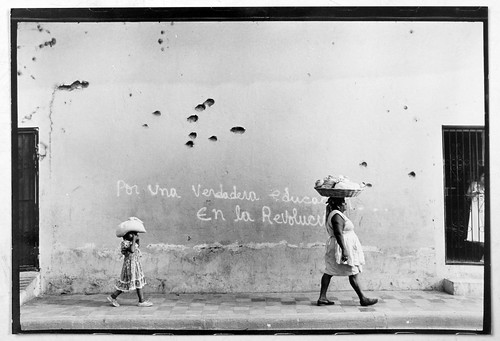
I did not get up and walk out of the movie cursing under my breath about bad taste. I was not offended. I do not even feel that it was a conscious decision I made to leave. My body just knew to grab my backpack and walk away while my brain tried to process the swollen influx of emotion that I had seen on the child's face as he opened his mouth to sob but never had the time to release the sound. Why couldn't I handle it? Except for my professor and his family who left when one of the 12-year-old friends of the protagonist who had been recruited was cursing them and threatening them with his gun, I was the only one who did not have the will to stay in my seat.
I have heard it said that some things are so horrible that you can't help but look at them. Stare. I think I understand that principal. I think that sometimes, though, things are 10 times worse, and you know that if you keep watching you will lose a part of your innocence or at least composure. I couldn't look anymore, because part of me didn't want for this story to be true. That's a lie. All of me wanted it to be untrue. I knew that over 75,000 of a nation of 5 million died. I knew that all boys were kidnapped at age 12 to join the national military. I knew that U.S. military personnel trained the national military. I knew that it was hell on Earth. I had just never seen it.
Seeing is different from knowing. Knowing is a list of facts. Knowing does not require empathy. Knowing allows us to create our own mental image of the situation. Knowing allows us to imagine the details to fit what is easiest for us to grasp. Seeing allows no such freedoms. Seeing is a direct transfer of a true image to my brain for internalization. Seeing is not flexible. Seeing questions my will to seek and accept truth. Seeing dares me to look and not act.
The El Salvadoran Civil War is over. I cannot use what I saw in Voces Inocentes to blog about the injustices that the campesinos are facing there. So what good are these haunting images in my mind? A tragedy that exists in our world today is that these movies are produced after the nations regain order. What genocides are being committed that I don't know about? Who needs our help now, and not 15 years from now when we are watching the traumatic experiences of the director on a big screen? Why make these films when the time is past? What did the director intend for me to be inspired to do?
There are several nations with child soldiers today. There is a drug war raging just a nation away. There is an AIDS epidemic ravaging life in Sub-Saharan Africa. There are girls being kidnapped and forced into sexual slavery in Southeast Asia. There are people taunting homosexuals so viciously in the United States that victims are ending their own lives. Is the face of a child entering into mortality enough to stop the world in its tracks. What have we done to the world we were given? Can we bring it back to the way it should be?
I came, I saw, now what?
Tuesday, September 28, 2010
Institutional Review Bourgeoisie, we dance again.

I'm back from Mexico, and I am possessed to return. No, really. I'm going back whether I want to or not (which, just for clarification, I do!). I'm undergoing the arduous process of analyzing my data from my study this summer and trying to compile some kind of comprehensible something that ends with some kind of tangible result. Pretty vague, huh? I blame my ambiguity on field studies.
Anyway, the purpose of this blog is to keep things "fresh" and "in the forefront" of my mind. My post-field writing professor is always telling me this, so why not give the advice of the university professor a try. Maybe he knows what he's talking about, eh? Consequently, this blog will serve as a pre-field journal as I dig deeper into the issues that interest me and strive to understand the gap in the literature I am delving into.
Right about now, you're asking, 'Natalie, just what IS it that you will be studying this time?' and I am so glad you asked. Actually, that's a lie. I'm not glad you asked. I don't know what I'm doing yet. I do however know what I like, so we'll start there (story of my life. No really.)
As I saw in my ranchos this summer, there were A LOT of migrant workers. I would have seen even more... if they weren't currently migrating. One former student found that 75% of the men from the area have migrated to the US at least once. I think migration is fascinating. I think the idea of uprooting oneself from everything they know and moving into a culture completely different from their own is an overwhelming task. Yet, these men do it as a means of income. Why? Why not depend on the government for money (more than some already do), or work in your brother's peanut fields, or sell at the market in the city, or go to school, or be a stay at home dad? I know that some of these questions would seem comical or even sarcastic if I were to ask them, but that doesn't make me any less interested in what their reasons and responses would be. Why Do You Migrate? There's opción número uno.
While we are still on the topic of migration, let's talk about the other idea I have a-brewin'. What about the ones who stay behind? What about the wives and children who depend on money from their spouse and father? The pregnant women who give birth and begin raising a child without the father? The women and oldest sons who must try to fill the hole that the breadwinner leaves behind? How do they adapt? Do they think it's worth the cost? I cannot imagine my mom sending my father off for an undetermined number of years and raising four kids alone. Then again, the people in these communities aren't as alone, maybe, as a woman could be in the United States. Extended families often live in the same village. Grandparents and aunts and uncles help look after their grandchildren, nieces, and nephews on a daily basis. Perhaps extended families step in to fill this gap when the man leaves. That would be interesting to ask about.
Lastly, I am greatly interested in literacy issues. Many of the older generations do not know how to read. Many mothers cannot help their children with their homework. My favorite student was very bright and I was surprised to find out that she was held back a year because of the difficulties she faced in learning to read. Her mother didn't know how to read. This is one example of how women's illiteracy issues transcend generations. I got to wondering if there were other ways that illiteracy among women affected younger generations. I began to wonder in what other ways illiteracy affected the women of these rural villages. I have NO idea.
And so, the field studies process begins yet again, and I find myself gearing up for another romp with the IRB (Institutional Review Board, or as I like to call it, the Institutional Review Bourgeoisie), an institution that exists to protect the human subjects I will be working with in my research. As I gear up to embark on another epic journey to rural Guanajuato, I would like to invite anyone who takes an interest in ethnographic and qualitative research, Mexico, migration studies, gender inequality, education, development, or me to share your thoughts and opinions as I blog away this school year (articles that you find would also be welcome and encouraged, and I can post them under my links).
¡Viva México! ¡Viva la igualdad! ¡Viva la gente que es diferente!
Subscribe to:
Posts (Atom)